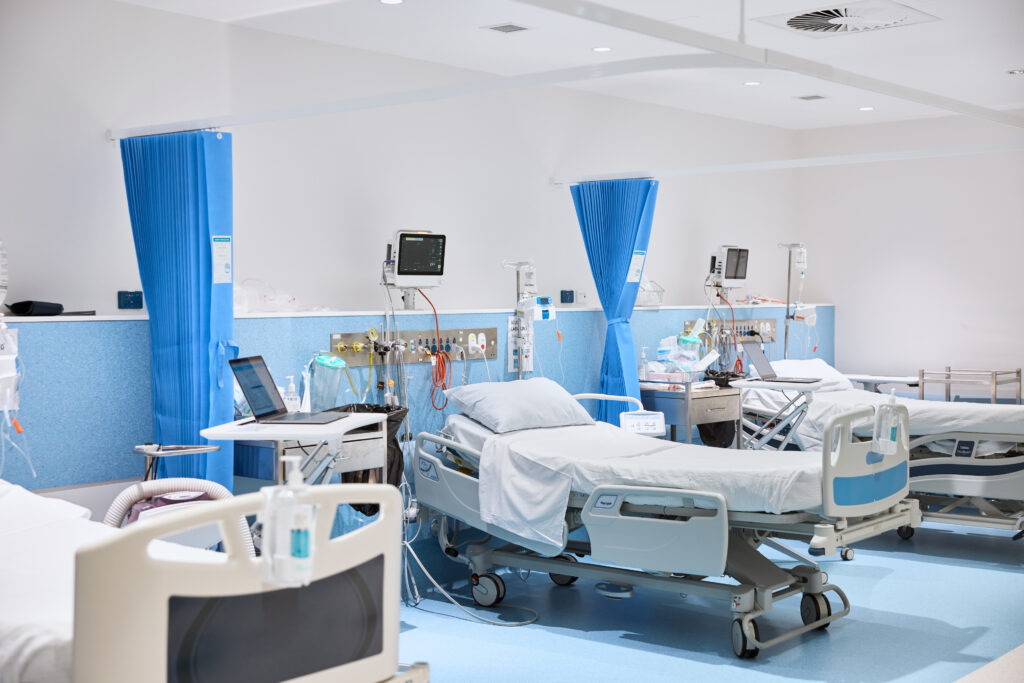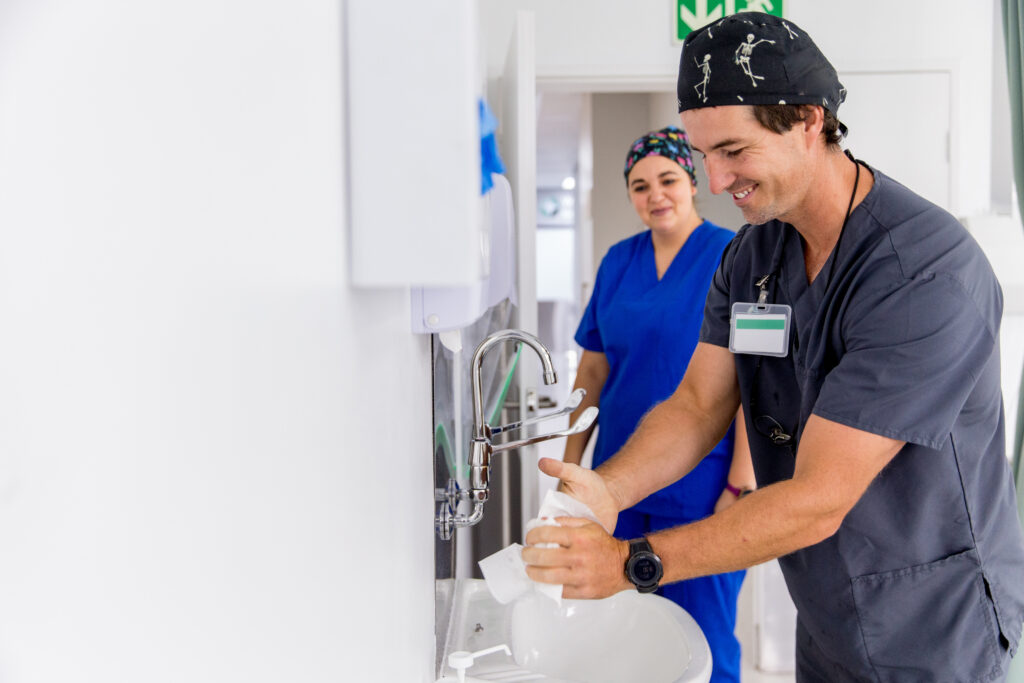
The extraordinary number of interactions between patients, visitors, staff and equipment in healthcare environments create conditions for outbreaks of infection. Pathogens can spread via person-to-person contact, contaminated surfaces and equipment, airborne transmission and healthcare procedures involving invasive entry points.
In a report by the US Center for Disease Control and Prevention, almost 1.7 million patients acquired health care-associated infections (HAIs) annually. Of those hospitalized patients, nearly one in 17—approximately 98,000 people—died due to HAIs. A health economist at the CDC estimated that the additional cost of HAIs to hospitals ranged from US$28 billion to $45 billion.
In addition to the challenge of being high-contact environments, hospitals also have a number of factors that increase the risk of infection. Patients with weakened immune systems will be more susceptible. And the longer they stay in hospital, the greater the risk of being exposed.
Surgery and the use of medical devices also put patients at higher risk. And once an infection has taken hold, it may be more difficult to treat due to the prevalence of antibiotic resistance.
The risk of equipment-related infections
One of the primary contributing factors to the incidence of HAIs in hospitals is the use of contaminated medical devices or equipment. Bacteria, viruses and fungi can contaminate medical equipment during manufacturing, storage or use, and transmit pathogens to patients.
If medical devices are improperly cleaned and maintained, it’s possible for infection to occur. The three main reasons for disinfection or sterilization failure involve: using the incorrect cleaning agents; not allowing enough disinfection contact time; and a lack of adherence to manufacturer’s guidelines.
Preventing equipment-related infections
Real-time location systems (RTLS) are a technology designed to assist hospitals in tracking the location and movement of patients, staff and equipment—with real-time precision.
There are a variety of beneficial use-cases for RTLS, including asset management. Robust RTLS platforms give hospitals the tools to track and store significant quantities of data about the use and movement of medical assets. The way it works is that durable, low-profile tags are attached to medical devices and equipment. The equipment tags are specially designed to withstand high-level disinfectant chemicals and cleaning processes.
Hospital personnel can then run reports that track equipment and determine device use. The real-time visibility helps staff to locate equipment quickly, and ensure it is returned to the correct area for cleaning and disinfecting.
Increasing cleaning compliance
An RTLS solution can be integrated with hospital disinfection and sterilization protocols and schedules. For example, vital signs monitoring devices that measure heart rate, blood pressure, body temperature, oxygen saturation and respiratory rate must be cleaned and disinfected between each individual use. By attaching an RTLS tag to monitoring device, its movement can be tracked after use to a well-ventilated designated cleaning area away from patients.
If too much time passes between the vital signs monitoring device being used on a patient, the transition to the cleaning area, and the execution of the cleaning protocol, the RTLS solution can be programmed to trigger an alert. Staff will be notified to return the monitoring device to the designated cleaning area for disinfection before it is used on a new patient.
This RTLS feature helps to ensure compliance with cleaning critical medical devices. It also saves personnel from having to repeat reprocessing when time-windows have elapsed and, most importantly, keeps patients safe from cross-contamination. A secondary benefit of tracking medical devices and their cleaning schedules is that it decreases the downtime of devices left in a soiled state.
Additionally, an RTLS platform assists personnel in following equipment maintenance schedules, which reduces the potential downtime of equipment that has not been properly maintained. One of the most impactful benefits of being able to find mobile equipment is that it helps eliminate the wasted time that staff spend searching for equipment when it is being used, cleaned or stored.
Auditing and training
RTLS provides data records that enable hospitals to monitor and audit equipment usage and cleaning to ensure personnel comply with infection control protocols. The information can point to deficiencies where improvements are required, and additional training is needed to follow correct procedures and eliminate the risk of cross-contamination and HAIs to patients.
By delivering real-time visibility into the location, status and cleaning history of medical equipment, RTLS transforms infection control from a reactive process into a proactive, data-driven strategy. Hospitals can identify and address risks before they impact patient safety, ensuring that every device meets strict hygiene standards before it is used again.
Ultimately, preventing cross-contamination is not just about technology. Instead, it’s about building a culture of compliance, accountability and continuous improvement. When combined with rigorous protocols, staff training and a commitment to patient care, RTLS becomes a powerful tool for reducing healthcare-associated infections, improving operational efficiency and protecting lives.
In an era where every second counts and every patient interaction matters, real-time asset management is not simply an operational upgrade, it is a patient safety imperative.