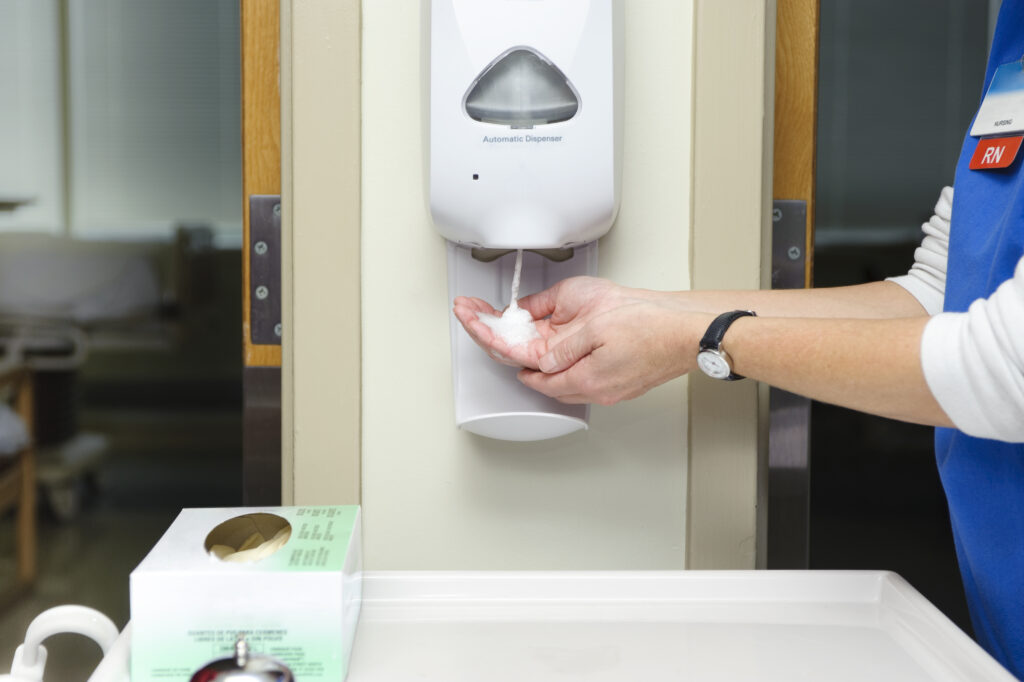




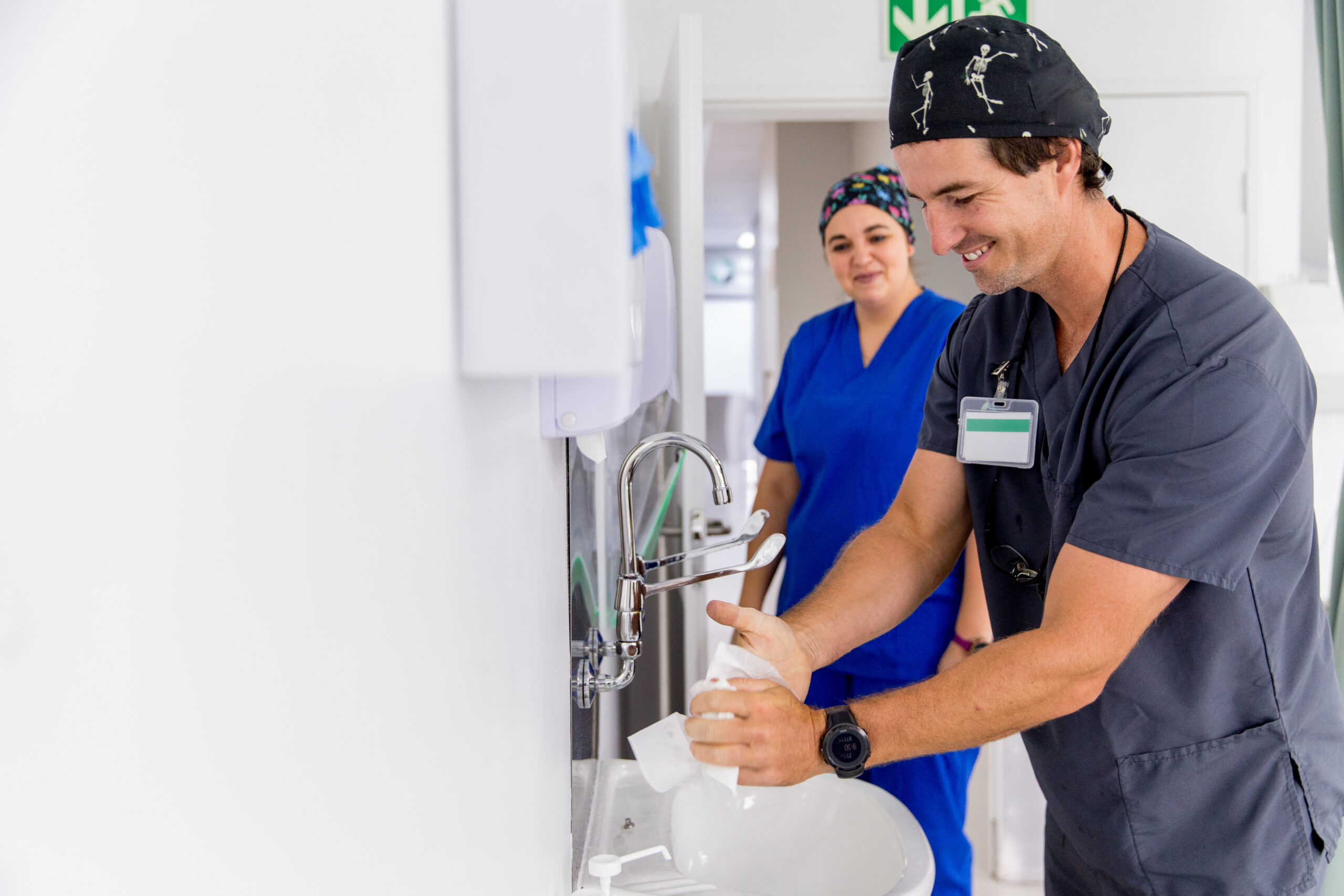
Hand hygiene remains one of the most important and measurable components of patient safety. The World Health Organization’s Five Moments of Hand Hygiene framework was developed to reduce the risk of healthcare-associated infections by defining when hand hygiene must occur during patient care.
Many healthcare organizations structure their infection prevention efforts around these five moments. Yet how compliance is measured often varies widely. In many hospitals, observation remains manual, time-consuming and incomplete.
As infection prevention leaders and CNOs evaluate their approach, the question is not whether the Five Moments matter. It is how reliably they are being captured.
Understanding the WHO Five Moments
The WHO framework identifies five critical points during care when hand hygiene is required:
1. Before touching a patient
Hand hygiene protects the patient from microorganisms carried on the hands of healthcare workers.
2. Before clean or aseptic procedures
This includes tasks such as inserting catheters, preparing injections or handling invasive devices. Proper hygiene reduces the risk of introducing pathogens into vulnerable areas.
3. After body fluid exposure risk
Following contact with blood, bodily fluids or contaminated items, hand hygiene protects both the caregiver and the environment, even when gloves were worn.
4. After touching a patient
This prevents the spread of microorganisms from one patient to others.
5. After touching patient surroundings
Surfaces such as bed rails, equipment and bedside tables can harbour pathogens. Cleaning hands after contact reduces environmental transmission.
These moments are designed to create a protective zone around the patient. However, industry estimates suggest that only a small percentage of hospitals fully align monitoring practices to all five moments. Many facilities instead rely on a simplified “room in, room out” approach, placing a sensor above the doorway to confirm whether hands were sanitized upon entering and exiting.
While helpful, this method does not always capture proximity to the patient bed or compliance tied to specific care interactions.
The Limits of Manual Observation
Approximately 75 percent of hospitals continue to rely on manual observation to measure hand hygiene compliance. In many cases, nurses or physicians are responsible for observing peers and compiling compliance data for reporting. However, this approach presents several challenges.
For example, manual audits require staff time that could otherwise be spent on patient care. Data collection and reporting can be tedious, particularly when preparing for accreditation reviews or internal quality meetings. Most importantly, observed behaviour does not always reflect typical behaviour.
The Hawthorne effect is well documented. When individuals know they are being watched, compliance tends to improve temporarily. As a result, manual observation may produce inflated statistics that do not fully represent daily practice.
At the same time, healthcare-associated infections remain a serious concern. The US Centers for Disease Control and Prevention estimates that approximately 5 percent of hospital admissions result in a healthcare-associated infection, contributing to roughly 720,000 infections and 75,000 deaths each year.
Even modest improvements in hand hygiene compliance have been associated with meaningful reductions in infection rates. One study found that a 10 percent increase in hand hygiene compliance corresponded with a 6 percent reduction in overall healthcare-associated infections.
For infection prevention leaders and CNOs, low compliance combined with manual, labour-intensive reporting creates both clinical and financial strain.
Built Around the Five Moments
HID Healthcare RTLS’s hand hygiene solution is designed with the WHO Five Moments embedded directly into its technology.
Rather than relying on periodic audits, the system automatically captures compliance events based on proximity to the patient bed zone and defined in and out workflows. This means the Five Moments are operationalized in real time, removing the need for manual observation and manual data collection.
The platform measures:
- Bed zone proximity and room-level movement
- In and out compliance standards
- Hand washing duration
- Individual healthcare worker compliance
- Every compliance event, continuously
Monitoring occurs 24 hours a day, 365 days a year. Facilities gain a true baseline, then use personalized scorecards and targeted training to improve performance.
Hospitals commonly see compliance increase by 30 to 40 percent within the first year, with sustained rates reaching 80 to 90 percent as programs mature. Improvements of this scale directly support patient safety goals and standards such as the Leapfrog hand hygiene measure.
Accurate, Real-Time and Actionable
Because data is captured automatically, infection prevention teams no longer need to compile spreadsheets or reconcile observation logs. Dashboards provide streamlined reporting for audits and leadership reviews.
In the event of a suspected infection, historical compliance data can support contact tracing and quality investigations.
This shift from manual sampling to continuous measurement provides a more accurate and transparent view of performance.
Designed for Affordability and Simplicity
Ease of use and affordability are essential. The solution operates as a standalone system and does not require integration with hospital Wi-Fi, EHRs or other networks. It works with any brand of soap or sanitizer dispenser. Deployment does not create additional cybersecurity burden for IT teams.
HID Healthcare RTLS offers one of the lowest priced hand hygiene solutions on the market. A single subscription fee covers hardware, badges, software and ongoing service. There is no large upfront capital investment. This hand hygiene as a service model allows hospitals to scale without significant financial risk.
Within the first year, many organizations see compliance improvements of 30 to 40 percent, supporting measurable return on investment through reduced infection risk and improved reporting efficiency.
Supporting Safer Care
The WHO Five Moments provide a clear framework for protecting patients. The challenge has never been understanding the moments. It has been capturing them consistently and accurately.
As hospitals continue to prioritize patient safety, compliance transparency and operational efficiency, many are reassessing the limits of manual observation. Automated monitoring aligned to the Five Moments offers a more complete picture of hand hygiene performance and a practical path toward sustained improvement.
For organizations seeking a reliable, affordable and measurable approach to hand hygiene compliance, there may be a better way forward.
Book a demo to see how HID Healthcare RTLS can support your infection prevention strategy.