For years, hand hygiene has been one of the most well-established foundations of patient safety. The guidance is clear, the evidence is overwhelming and the intent across healthcare systems is strong. And yet, compliance has remained one of the most persistent challenges in infection prevention.
What is changing now is not the science, but the expectation. With updated National Performance Goals taking effect in 2026, the Joint Commission is making it clear that hand hygiene is no longer simply a best practice to encourage, but a performance area that must be measured, improved and demonstrably managed as part of a hospital’s broader infection prevention strategy.
This marks a shift from awareness to accountability.
A New Standard for Infection Prevention
Under National Performance Goal #5, hospitals are required to prioritize infection prevention and control through structured, measurable programs. This includes:
- Implementing an infection prevention program with active surveillance and control activities
- Complying with evidence-based guidelines from the Centers for Disease Control and Prevention and the World Health Organization
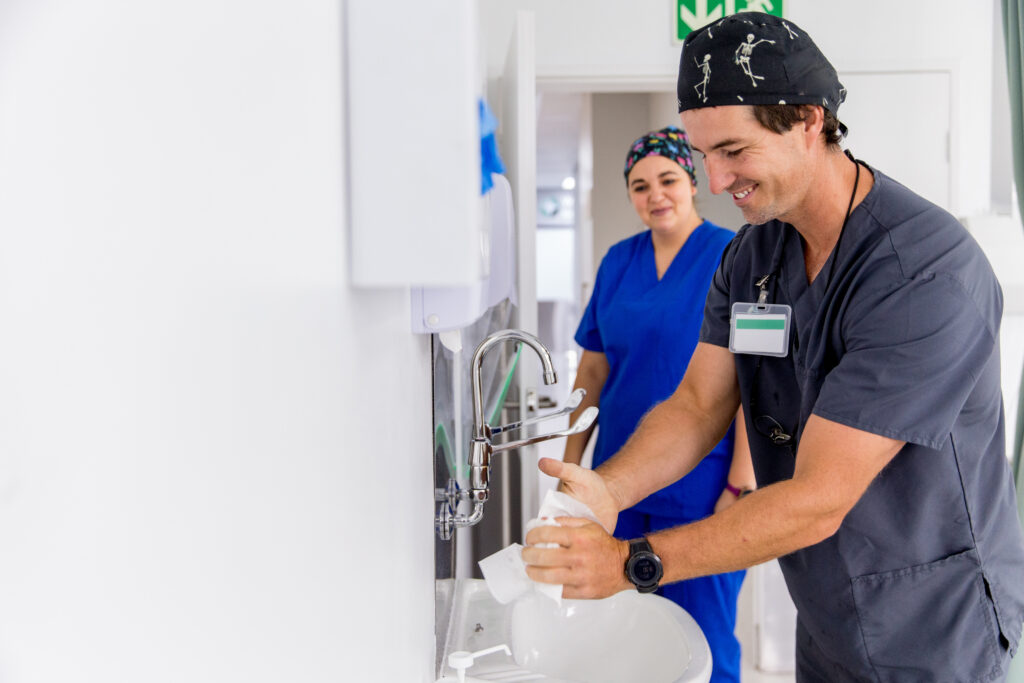
- Ensuring healthcare personnel perform hand hygiene at the appropriate clinical moments
- Setting documented goals for improvement
- Monitoring performance and demonstrating progress over time.
Importantly, the Joint Commission does not prescribe a universal compliance threshold. Instead, hospitals are expected to define goals based on their own risk profiles and demonstrate meaningful improvement against them. That distinction matters because it shifts the focus away from static targets and toward continuous, data-driven performance.
Why Hand Hygiene Remains a Challenge
On paper, hand hygiene appears straightforward. In practice, it is deeply embedded in complex, fast-moving clinical workflows.
Clinicians are expected to perform hand hygiene at specific moments throughout care delivery, including before and after patient contact, after exposure to bodily fluids, after touching patient surroundings and after glove removal. These are not occasional actions but repeated behaviours that occur dozens, sometimes hundreds of times per shift.
In high-acuity environments, where urgency and cognitive load are already elevated, maintaining consistent adherence becomes difficult. This is not due to a lack of awareness, but because the system relies heavily on memory, habit and manual reinforcement.
Traditional monitoring methods have not fully addressed this challenge.
The Limits of Manual Observation
Many hospitals continue to rely on direct observation and periodic audits to assess hand hygiene compliance, however, these approaches have limitations:
- They are resource-intensive and difficult to scale
- They capture only a small sample of actual behaviour
- They are subject to observer bias
- They often influence behaviour temporarily rather than sustainably.
Most importantly, they provide retrospective insight. They show what happened, because someone was watching, but not what is happening in real time. As expectations evolve, this gap becomes increasingly significant.
Closing the Gap Between Guidelines and Reality
The 2026 requirements make it clear that hospitals must move beyond intermittent observation toward continuous, objective measurement. This is where technology plays a critical role.
A real-time hand hygiene monitoring system, using Bluetooth Low Energy (BLE) and low-frequency (LF) technologies, enables a fundamentally different approach. It shifts hand hygiene from an estimated behaviour to a measurable one.
Reliable, Objective Monitoring
Hand Hygiene solutions detect when clinicians enter and exit patient care zones, when hand hygiene dispensers are used and whether expected hand hygiene events are met or missed. This creates continuous, unbiased visibility across the care environment and supports both compliance monitoring and improvement tracking.
Real-Time Feedback at the Point of Care
Real-time feedback further strengthens this model by reinforcing behaviour at the point of care. Rather than relying solely on retrospective audits, clinicians can receive immediate prompts when a hand hygiene opportunity is missed, helping to build consistency in the moments that matter most.
Actionable Performance Insights
At the leadership level, dashboards and analytics provide actionable insight into compliance trends, high-risk areas and performance over time. This enables targeted interventions, while also supporting the documentation and reporting requirements associated with accreditation.
Alignment with Evidence-Based Practice
Importantly, these systems align with established CDC and WHO guidelines, ensuring that measurement reflects the behaviours most closely tied to infection prevention. This is not about counting events, but about reinforcing the right actions consistently.
From Monitoring to Meaningful Improvement
The shift underway is not simply about better data. It is about changing how hand hygiene is experienced within the system.
When compliance is visible, feedback is timely and performance is measurable, hand hygiene becomes part of a continuous improvement cycle, rather than a periodic audit exercise. This has broader implications for how safety culture is understood and sustained.
Hand hygiene is often a leading indicator of safety culture, reflecting how well systems support frontline behaviour and how effectively feedback loops operate. As expectations evolve, organizations are recognizing that sustained improvement depends on infrastructure, not just intention.
Why This Matters for Accreditation and Care Quality
The Joint Commission’s updated requirements are not introducing new science. They are reinforcing accountability. As such, hospitals must now demonstrate:
- Continuous monitoring of hand hygiene performance
- Defined improvement goals
- Measurable progress over time
- Integration into broader infection prevention programs.
A technology-enabled approach supports each of these requirements directly, while also strengthening clinical consistency and patient safety. At the same time, it reduces reliance on manual processes and provides defensible data for surveys and internal governance.
A System-Level Approach to Safer Care
Hand hygiene has always been fundamental to infection prevention. What is changing is how it is managed.
As healthcare systems move toward continuous, data-driven improvement, hand hygiene is becoming less about individual compliance and more about system design. When the right infrastructure is in place, clinicians are supported in doing what they already know is right, making behaviour easier to sustain and reducing unnecessary variation.
This is how everyday practices contribute to safer, more reliable care environments.
Call to Action
To learn more about how HID’s hand hygiene solution supports real-time hand hygiene monitoring and continuous compliance, request a demo or explore how data-driven solutions can strengthen your infection prevention strategy.
About HID Healthcare RTLS
HID Healthcare RTLS delivers scalable, secure and integrated real-time location solutions designed for complex healthcare environments. From asset visibility to staff safety and hand hygiene monitoring, HID supports healthcare organizations in improving operational performance, strengthening compliance and advancing patient safety.