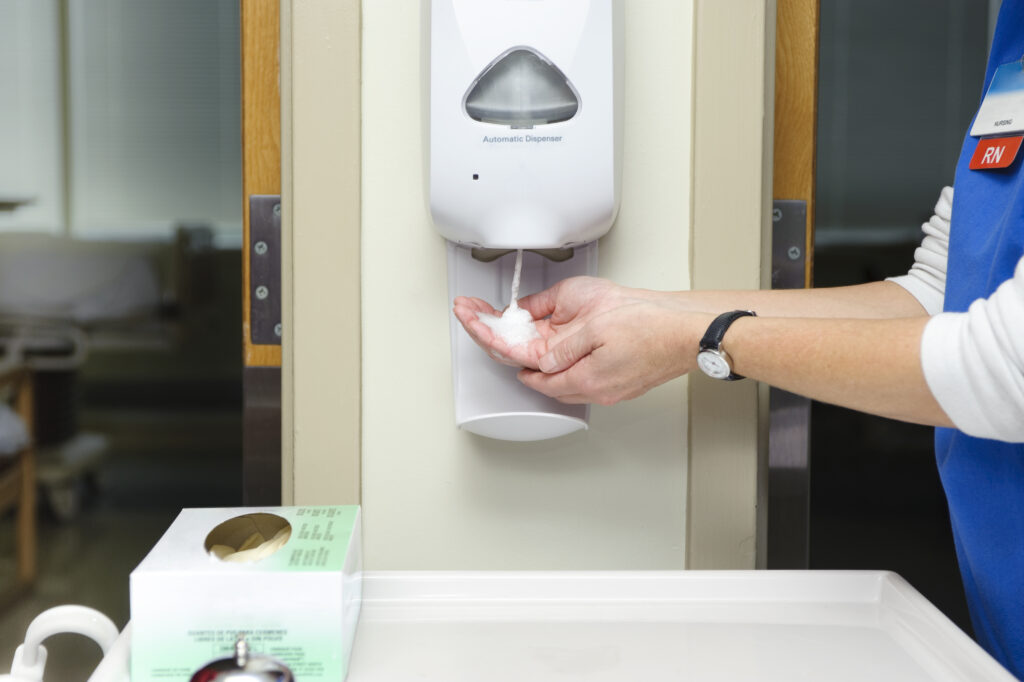




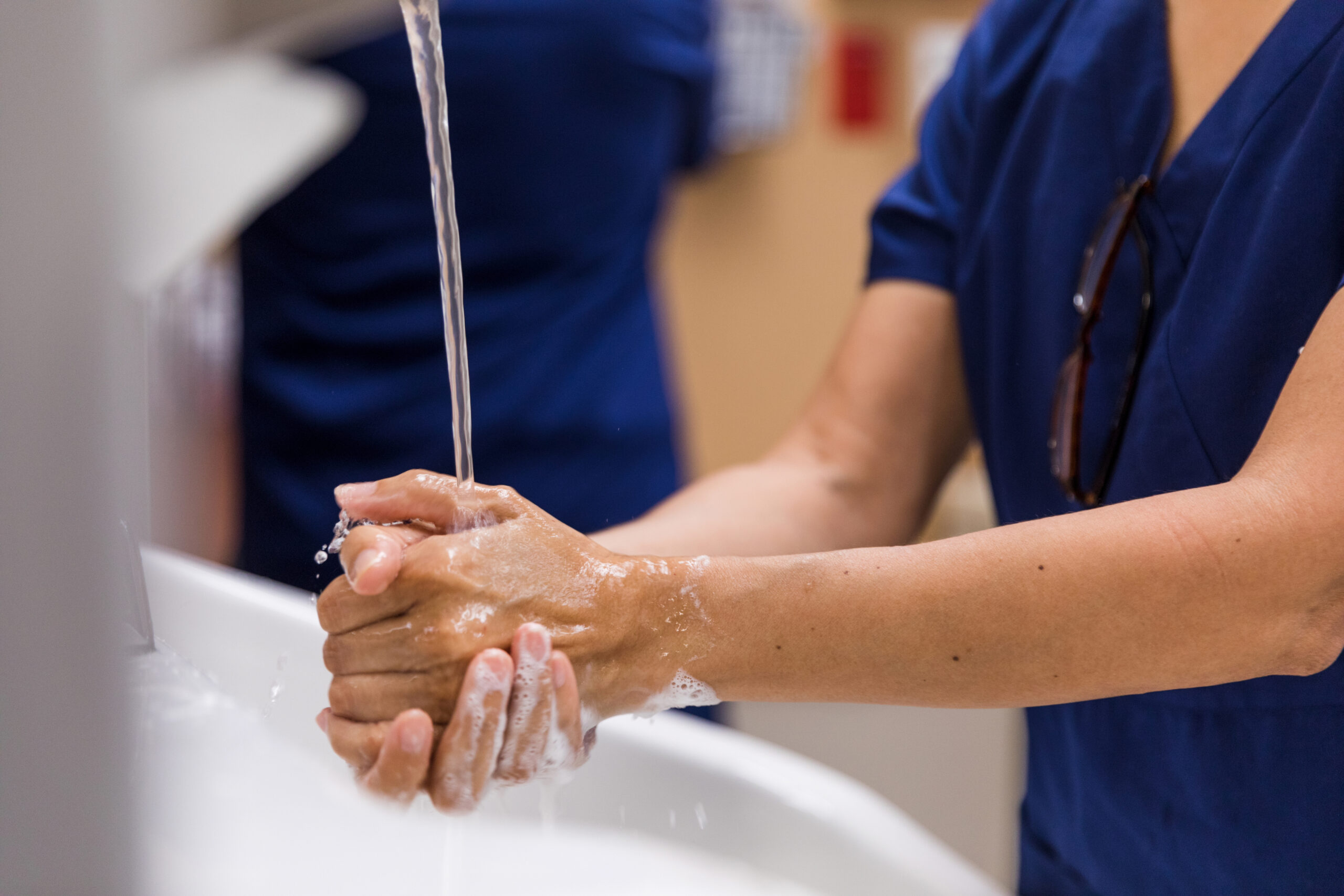
Hand hygiene is widely recognized as one of the most effective ways to prevent healthcare-associated infections (HAIs). Yet despite its importance, many hospitals still struggle to measure and improve compliance in a meaningful way.
On any given day, 1 in 31 hospital patients acquires at least one healthcare-associated infection, often leading to longer hospital stays, higher treatment costs and increased pressure on clinical teams. Strengthening infection prevention programs starts with understanding where compliance gaps exist.
For many healthcare organizations, that visibility remains difficult to achieve.
The limits of traditional hand hygiene monitoring
Many healthcare organizations still rely on manual observation programs to measure hand hygiene compliance.
While these programs have long been considered the standard approach, they present several well-known limitations:
- Only a small percentage of hand hygiene opportunities are observed
- Staff behavior often changes when observers are present
- Data collection requires significant staff time and administrative effort
As a result, infection prevention teams often lack a complete and accurate picture of compliance across their facility.
Without reliable data, it becomes difficult to identify improvement opportunities, track progress or sustain long-term behavior change.
A new approach: automated hand hygiene monitoring
Advances in real-time location systems (RTLS) are enabling healthcare organizations to monitor hand hygiene compliance more accurately and continuously.
Automated monitoring captures hand hygiene activity across clinical environments, providing infection prevention teams with near real-time visibility into compliance patterns. Instead of relying on periodic audits, hospitals gain continuous insights that support more effective improvement initiatives.
With better visibility into compliance behavior, healthcare organizations can:
- Identify gaps in hand hygiene practices
- Provide targeted education and feedback
- Track improvement over time
- Strengthen infection prevention programs
To explore these challenges and opportunities in more depth, we’ve developed a new guide:
Take Control of Hand Hygiene
This eBook outlines how healthcare organizations can strengthen infection prevention programs by improving the accuracy and visibility of hand hygiene monitoring.
Inside the guide, you’ll learn:
- Why traditional hand hygiene monitoring methods often fall short
- How automated monitoring provides a clearer picture of compliance
- The operational and cost advantages of modern monitoring approaches
- How actionable insights can help drive lasting behavior change
Designed for infection prevention leaders, quality improvement teams and healthcare administrators, this guide provides practical insight into how hospitals are improving compliance while reducing the burden of manual monitoring.
Improving hand hygiene compliance requires more than good intentions. It requires accurate visibility into real behavior across the care environment.
If your organization is looking to improve compliance, reduce administrative burden and strengthen patient safety outcomes, this guide provides a clear starting point.
Download the eBook, Take Control of Hand Hygiene, and learn how to transform your hand hygiene monitoring strategy.