



Executive Summary
Equipment availability is a fundamental but often under-measured driver of patient safety, clinician effectiveness and operational performance. In many hospitals, mobile medical equipment moves constantly across units without real-time visibility. The result is time lost searching, delayed interventions, rising rental costs and growing clinician frustration.
Nurses spend on average 10 percent of their shift looking for equipment. In a 300-bed hospital, that equates to approximately 156,000 hours per year, representing more than five million dollars in lost wages and clinical time that could otherwise be directed toward patient care.
Real-Time Location Services (RTLS)-enabled asset visibility transforms this dynamic. By providing continuous awareness of equipment location, status and utilization, hospitals can reduce friction in care delivery while improving financial stewardship.
This white paper examines the clinical, operational and financial case for real-time asset visibility, grounded in the Real-Time Safety Framework:
Detect → Notify → Respond → Stabilize → Prevent
It also outlines how scalable RTLS infrastructure supports long-term enterprise growth beyond asset management, creating a foundation for broader patient safety and operational use cases.
The Problem: Equipment Searching as a Hidden Safety and Performance Risk
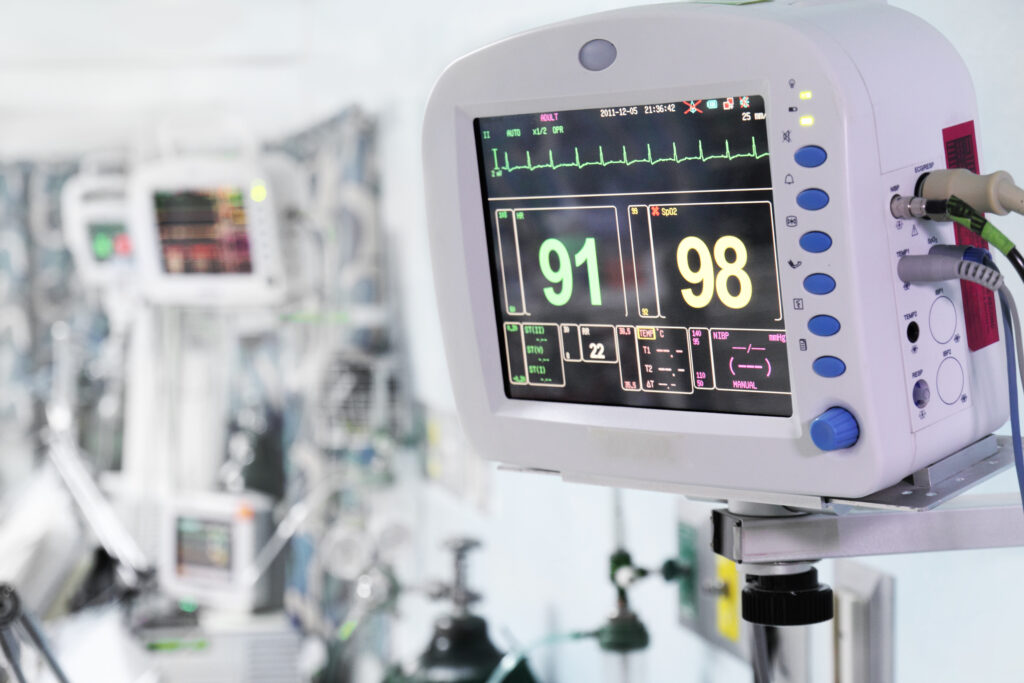
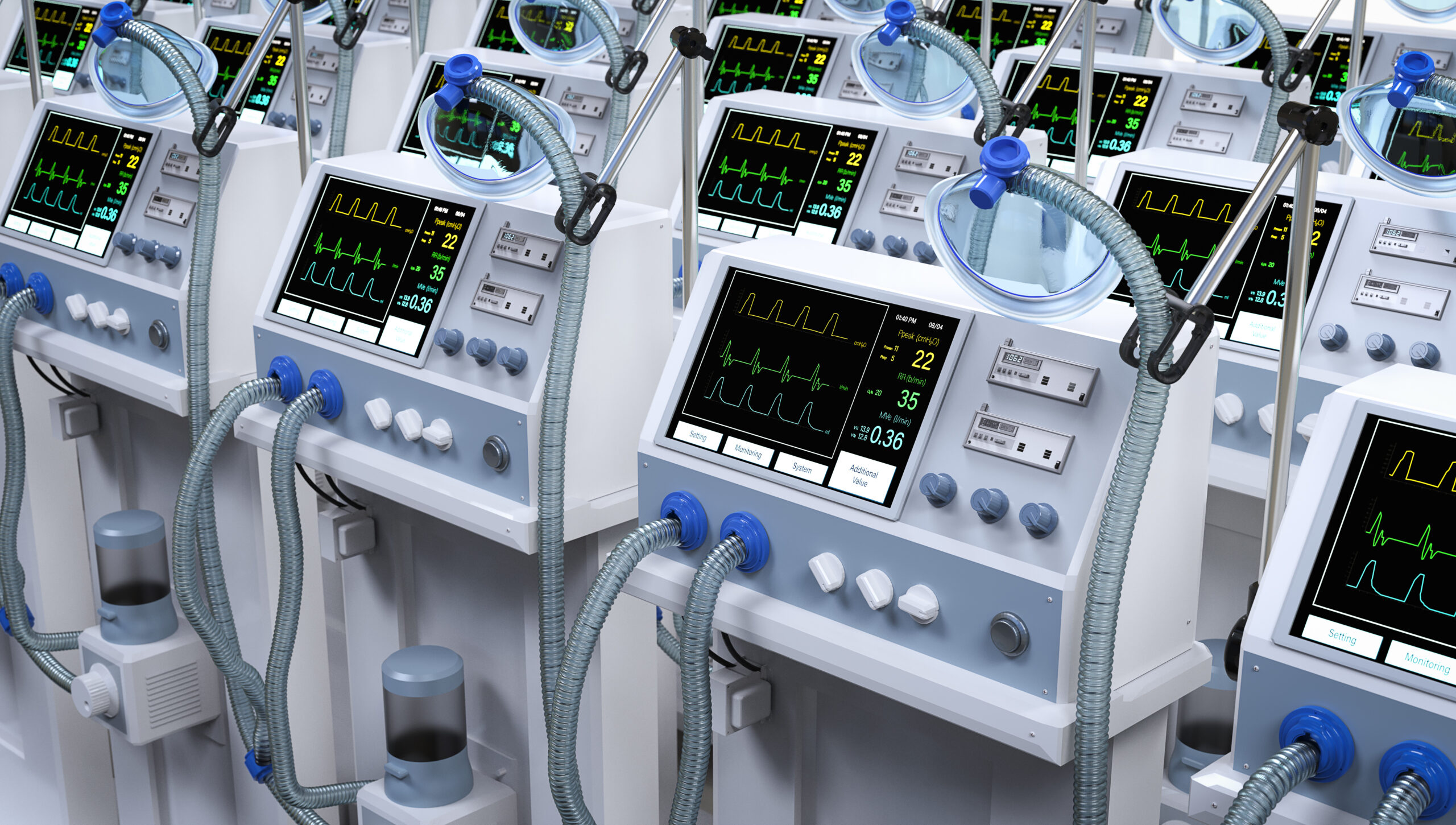
Mobile medical equipment underpins nearly every care environment, including IV pumps, ventilators, bladder scanners, portable monitors, wheelchairs, stretchers and crash carts. These assets move constantly between units, through cleaning cycles and across patient transitions.
Traditional asset management methods rely on manual tracking, informal communication and reactive searching. Most hospitals lack continuous visibility into location or status.
The consequences are often underestimated.
Clinicians routinely report spending 30 to 60 minutes per shift searching for equipment, with some estimating even more during high-acuity periods. This time loss contributes to delayed interventions, workflow interruptions, frustration and rising burnout. It also increases patient wait times and length of stay.
Beyond inefficiency, searching introduces safety risk. When required equipment is unavailable during an emergency, procedural preparation or discharge transition, care slows. In time-sensitive environments, delays can escalate quickly.
This issue affects both clinical teams and executive leadership. For CNOs, it directly impacts nurse workload and morale. For CIOs and CFOs, it represents measurable operational waste and capital misallocation.
Asset searching is not simply an inconvenience. It is a structural weakness in the clinical environment.
The Solution: Real-Time Asset Visibility Operationalized Through InVIEW Clarity
RTLS-enabled asset visibility creates a continuous, system-level awareness of mobile medical equipment across the hospital.
InVIEW Clarity Asset Management from HID Healthcare RTLS transforms asset tracking into an integrated operational system designed specifically for healthcare environments. Built on cost-effective BLE technology, InVIEW Clarity delivers room- or zone-level accuracy, role-based dashboards and seamless integration with CMMS, EHR and Directory Services.
Rather than functioning as a standalone tracking tool, InVIEW Clarity operationalizes the Real-Time Safety Framework within everyday clinical and operational workflows.
DETECT — Establishing Real-Time Awareness
InVIEW Clarity provides continuous visibility into:
- Asset location across units and campuses
- Equipment status and availability
- Cleaning and reprocessing workflows
- Preventive maintenance triggers based on true usage
- Utilization trends and dwell time
Because InVIEW Clarity integrates with CMMS and existing systems, asset data does not remain siloed. It becomes part of the hospital’s operational intelligence layer.
For CNOs, this means equipment readiness is no longer assumed.
For CIOs, it means asset data is defensible and auditable.
NOTIFY — Guiding Teams to the Right Equipment
When a clinician searches for equipment, InVIEW Clarity surfaces the closest available asset that meets readiness criteria.
Role-based dashboards ensure that:
- Nurses see what they need quickly
- Biomed teams see service priorities
- Leaders see utilization performance
This reduces workflow friction and eliminates reliance on informal communication between units. It also supports clean-to-ready workflows that reinforce infection prevention protocols.
RESPOND — Accelerating Clinical and Operational Action
By integrating directly with CMMS, InVIEW Clarity enables technicians to view real-time asset location within work orders.
This shortens service response time and improves preventive maintenance adherence. Usage-aware maintenance reduces unnecessary downtime and extends asset life.
In high-acuity settings, faster retrieval of pumps, monitors and ventilators directly supports patient stabilization.
STABILIZE — Creating Predictable Equipment Flow
When visibility becomes continuous rather than episodic, equipment distribution stabilizes.
InVIEW Clarity analytics can identify:
- Assets not seen in 30 days
- PAR level performance
- Rental and third-party asset visibility
- Unit-level utilization imbalances
This transparency reduces hoarding behaviours and improves cross-unit trust. Units operate with greater predictability and throughput improves.
PREVENT — Enabling Proactive Stewardship
Longitudinal data allows leadership to:
- Right-size fleets and reduce unnecessary purchases
- Decrease rental spend
- Prevent loss and shrinkage with location-based alerts
- Support capital planning with defensible utilization metrics
The result is not reactive problem-solving, but proactive resource stewardship.
Because InVIEW Clarity is architected as scalable infrastructure, hospitals can begin with asset management, a use case with well-documented ROI, and expand over time into additional RTLS-supported workflows without duplicating infrastructure.
The Benefits and Results
Clinical Impact: Protecting Patients Through Reliable Equipment Availability
Equipment availability is not an operational detail. It is a patient safety function.
In emergency departments, delayed access to infusion pumps, monitors or airway equipment can slow critical interventions. In intensive care units, highly mobile devices must be immediately locatable to support rapidly changing clinical conditions. In operating rooms and procedural suites, case delays increase anesthesia time, resource cost and patient stress.
Even discharge workflows depend on reliable equipment access. A missing wheelchair can delay patient movement, contribute to ED boarding and extend length of stay.
Real-time asset visibility changes this dynamic by replacing uncertainty with awareness. When equipment location and readiness are visible in real time, teams spend less time coordinating logistics and more time delivering care.
InVIEW Clarity strengthens this reliability by:
- Providing role-based access so clinical staff see only relevant equipment
- Supporting clean-to-ready workflows that reinforce infection prevention
- Integrating with CMMS to ensure maintenance status is visible
- Delivering room- or zone-level accuracy aligned to clinical need
The result is not simply faster searching. It is a calmer, more predictable clinical environment.
When equipment is available and trusted, escalation happens sooner, preparation improves and transitions become smoother. These improvements may not always appear dramatic on dashboards, but they directly affect patient experience and outcomes.
Reliable equipment access is foundational to safe care.
Clinician Well-Being and Emotional Impact
The burden of searching for equipment carries an emotional cost that is often overlooked.
Repeated workflow interruptions erode efficiency and create tension between teams. When units begin holding equipment “just in case,” trust deteriorates. Clinicians experience frustration when systems appear to work against them.
Over time, this contributes to burnout and moral distress, particularly when care is delayed because the necessary tools cannot be located.
Real-time asset visibility removes this chronic friction.
By providing consistent awareness and predictable access, RTLS restores confidence in the system. When clinicians trust that the equipment they need can be located immediately, they experience less cognitive load and fewer interruptions.
This predictability supports:
- Improved teamwork across units
- Reduced tension during high-acuity events
- Greater psychological safety
- Stronger retention in high-demand departments
Clinicians often describe asset visibility not as a technology deployment, but as the removal of a long-standing obstacle. The gains feel immediate: less searching, fewer disruptions and more time at the bedside.
When operational systems support care rather than complicate it, clinicians can practice more fully at the top of their license. That restoration of focus may be one of the most meaningful returns of all.
Operational Stability and Throughput
Hospitals under sustained capacity pressure depend on predictable workflows. Equipment availability directly influences patient flow, even if it is rarely discussed that way.
When devices are unevenly distributed, delayed in cleaning cycles or sitting idle in hallways, throughput slows. Workarounds emerge. Rentals increase. Tension rises between units. Variation becomes normalized.
Real-time asset visibility introduces system-wide transparency. With continuous location and utilization data, leadership can identify imbalances, monitor PAR levels and adjust distribution proactively rather than reactively.
InVIEW Clarity supports this stabilization through role-based dashboards and analytics that surface equipment not seen in 30 days, unit-level utilization patterns and rental dependencies. This visibility allows teams to correct bottlenecks before they escalate.
The impact is measurable:
- More consistent OR start times
- Faster discharge readiness
- Reduced ED boarding pressure
- Improved coordination during peak census
Operational stability is not only about staffing and beds. It is also about reliable access to the tools that enable care at scale. When equipment flow becomes predictable, care flow follows.
Financial Impact and ROI: A Strategic CIO Perspective
While the clinical impact is visible at the bedside, the financial impact is measurable at the enterprise level.
Hospitals frequently over-purchase equipment because utilization data is incomplete. Rental costs rise when owned assets cannot be located. Losses occur when devices move off-unit without visibility. Preventive maintenance is scheduled by calendar rather than true usage.
Real-time asset visibility addresses these inefficiencies systematically.
InVIEW Clarity supports:
- Utilization-based fleet right-sizing
- Reduction in unnecessary rentals
- Location-based alerts to prevent loss and shrinkage
- Usage-aware preventive maintenance to extend asset life
- Integration with CMMS and enterprise systems to reduce duplicate workflows
For CIOs, the value extends beyond cost avoidance.
InVIEW Clarity is delivered as scalable infrastructure built on cost-effective BLE technology. This reduces long-term IT complexity, protects architectural flexibility and supports disciplined capital planning. It integrates into existing digital ecosystems rather than introducing isolated data silos. This reduces long-term IT complexity and protects future architectural flexibility.
Hospitals can begin with asset management, a use case with well-documented and defensible ROI, and expand into additional RTLS-enabled workflows over time. The same infrastructure can support broader patient safety, environmental monitoring or staff safety initiatives without duplication.
This approach protects capital investment while enabling long-term digital transformation.
The regained clinical hours alone represent significant opportunity. In large facilities, even partial recovery of time spent searching can translate into millions of dollars in operational value.
ROI is not limited to savings. It includes:
- Stabilized throughput
- Reduced variation
- Lower preventable risk
- Improved workforce retention
For CIOs and CNOs alike, asset visibility strengthens both fiscal stewardship and care delivery.
Accreditation and Compliance: Supporting Readiness and Accountability
Healthcare organizations operate within rigorous regulatory frameworks. Equipment management, infection prevention and emergency preparedness are subject to ongoing oversight.
Real-time asset visibility supports compliance with:
- Joint Commission standards related to equipment management
- CMS Conditions of Participation
- Environment of Care expectations
- Infection control documentation requirements
- Emergency response protocols
Survey teams increasingly expect clear documentation and traceability. When equipment location, status and maintenance history are visible in real time, audit preparation becomes more efficient and less disruptive.
Beyond survey readiness, continuous visibility strengthens internal accountability and reduces preventable risk.
Leadership Value: Building a More Predictable Hospital
For executive leadership, asset visibility delivers more than operational efficiency.
It provides clearer system-wide insight, stronger control over variation and improved confidence in capital stewardship. Leaders gain visibility into how equipment moves, how it is utilized and where inefficiencies persist.
Over time, this transparency contributes to cultural stability. When clinicians trust that systems support their work, tension decreases. When variation decreases, predictability increases. When predictability increases, risk declines.
Asset visibility helps transform the hospital into a more resilient and responsive system — one that supports both patient safety and workforce stability. In an era defined by staffing volatility and financial constraint, predictability itself becomes a strategic advantage.
Conclusion
Real-time asset visibility is more than a tracking capability. It is a clinical enabler, an operational stabilizer and a financial safeguard.
By reducing the hidden friction of equipment searching, hospitals strengthen patient safety, clinician well-being and enterprise performance simultaneously.
Asset visibility restores time, clarity and confidence to care teams. It enables leaders to manage capital responsibly while building scalable infrastructure for future innovation.
When equipment is reliable, clinicians can be reliable. And when clinicians are supported by predictable systems, patients receive safer, more timely care delivered with greater confidence and presence.
Schedule a demo to see our InVIEW Clarity Asset Management solution in action.
About HID Healthcare RTLS
HID Healthcare RTLS delivers scalable, secure and integrated real-time location solutions designed for complex healthcare environments. From asset visibility to patient safety and workforce protection, HID provides a unified platform that supports operational efficiency, regulatory compliance and long-term digital strategy.